trip barter
context
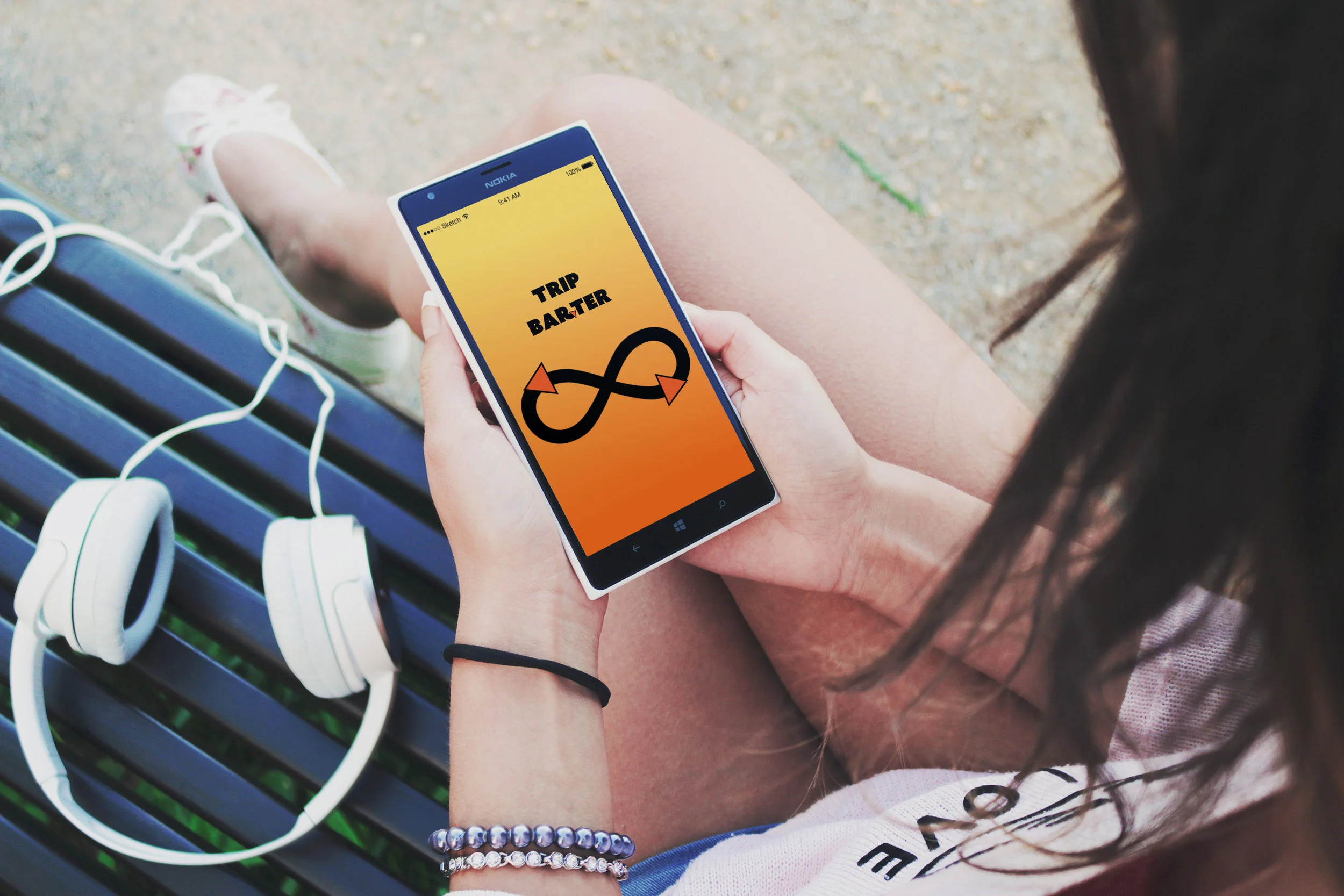
Carpool Meets Bartering App
The goal of this project was to discover an everyday problem of a fellow designer and create a simple prototype for a mobile app that addressed their specific pain points.
My client had been working from home for 11 years before changing fields. Now working in the city, her round trip commute meant spending two hours or more in traffic each day. She'd recently moved, and didn't know anyone with whom she could carpool to access the high occupancy vehicle lane to cut travel time.
The client also had access to free parking in the city, which meant no parking fees. The client was not looking to divide toll costs, but was not opposed to some form of compensation.
overview
Goal
Discover an everyday problem of a fellow designer. Design a user-friendly prototype for a simple mobile app that addresses their specific pain points.
Time frame
One week
My Role
UX Designer
Deliverables
Problem Identification
Interviews & Affinity Maps
Research
Sketches
Paper Prototype
Hi-Fi Prototype
Tools
Pen & Paper
POP (Prototype on Paper)
Sketch
InVision
Principle
challenge
Problem Statement
Parking in the city is one of the most commonly reported concerns amongst commuters whom as a result prefer to carpool as an efficient and eco-friendly way to travel and meet new people; there are however no non-monetary rideshare platforms for individuals who'd prefer to trade goods and or services.
Solution Statement
Provide commuters a rideshare platform that connect drivers and riders with similar commutes in exchange for advertised or requested legal goods and services; like dog walking, gift cards, hand knitted beanies, and other desirables.
process
Problem Identification
Identify a problem of a fellow designer.Research the Problem
Research rideshare competitors and solicited feedback on commuter habits and preferences.Design the Solution
Design a customized product, supported by research.Prototype the Design
Develop a paper prototype of a customized product using, sketches, and the POP (Prototype on Paper) app.Test the Solution
Choose participants to test out the prototype using POP.Iterate on the design
Make changes to the UI based on feedback to produce hi-fi mockups.
deep dive
Research
My interview participants consisted mostly of work professionals in the tech industry, ages 19–65 years. Their daily commutes ranged from 15 minutes- 1.5 hours. I asked each a series of four open-ended questions. I also utilized the Taiichi Ohno’s ‘5 whys rule’ to gain a deeper understanding of the cause of each user’s decisions.
Using open ended questions to get at my point of bartering was challenging, as people are generally used to paying monetarily for services.
Affinity Maps
I wrote down the key points that were stated during my interviews and organized them into themed groups.
Pleasure Points:
Fast commutes
Social networking opportunities
Eco-friendly opportunities
Gifts
Pain Points:
Being stuck in traffic
Not accessing the HOV lane
Not being able to carpool
Taking money for mutual help
market competitors
I looked into what popular rideshare apps were on the market. All the companies I researched used a monetary exchange system or toll discounts to provide services.

While there are currently numerous rideshare apps on the market, none offered a non-monetary exchange for services. All the apps were free to download in the App Store®. I began to wonder if there would be a market for an app that offered a barter system in exchange for carpool services.
IA and Conception
I used the affinity mapped themes from the interviews to further develop my interface sketches for Trip Barter.
Here's the story:
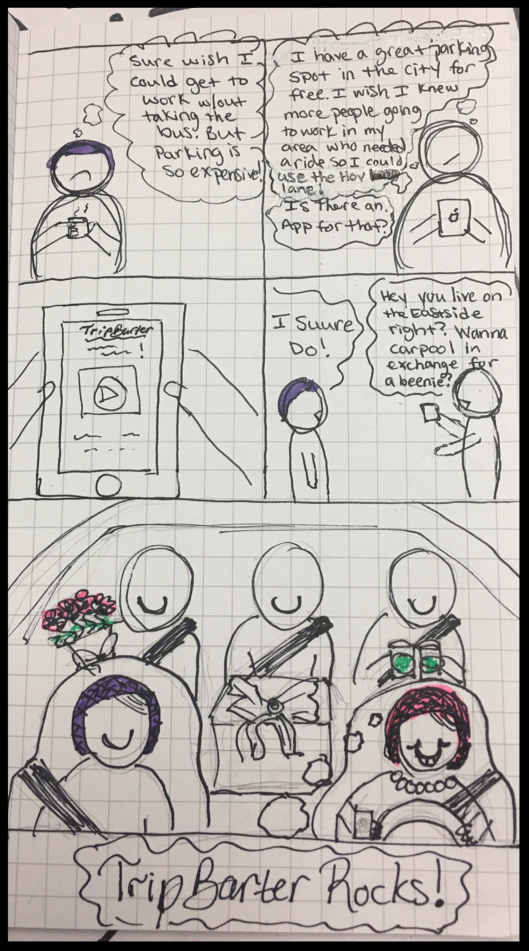
Story boards
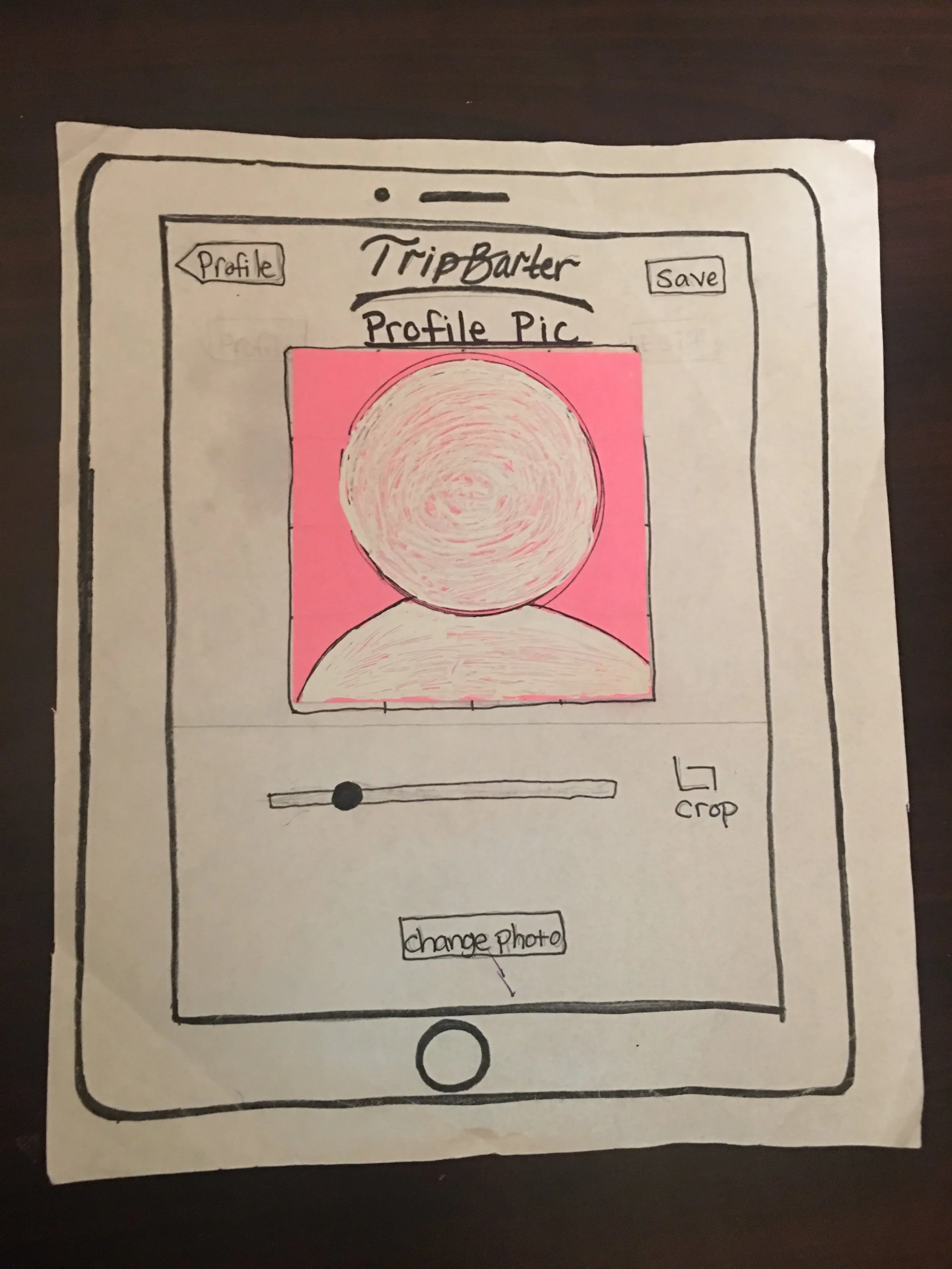
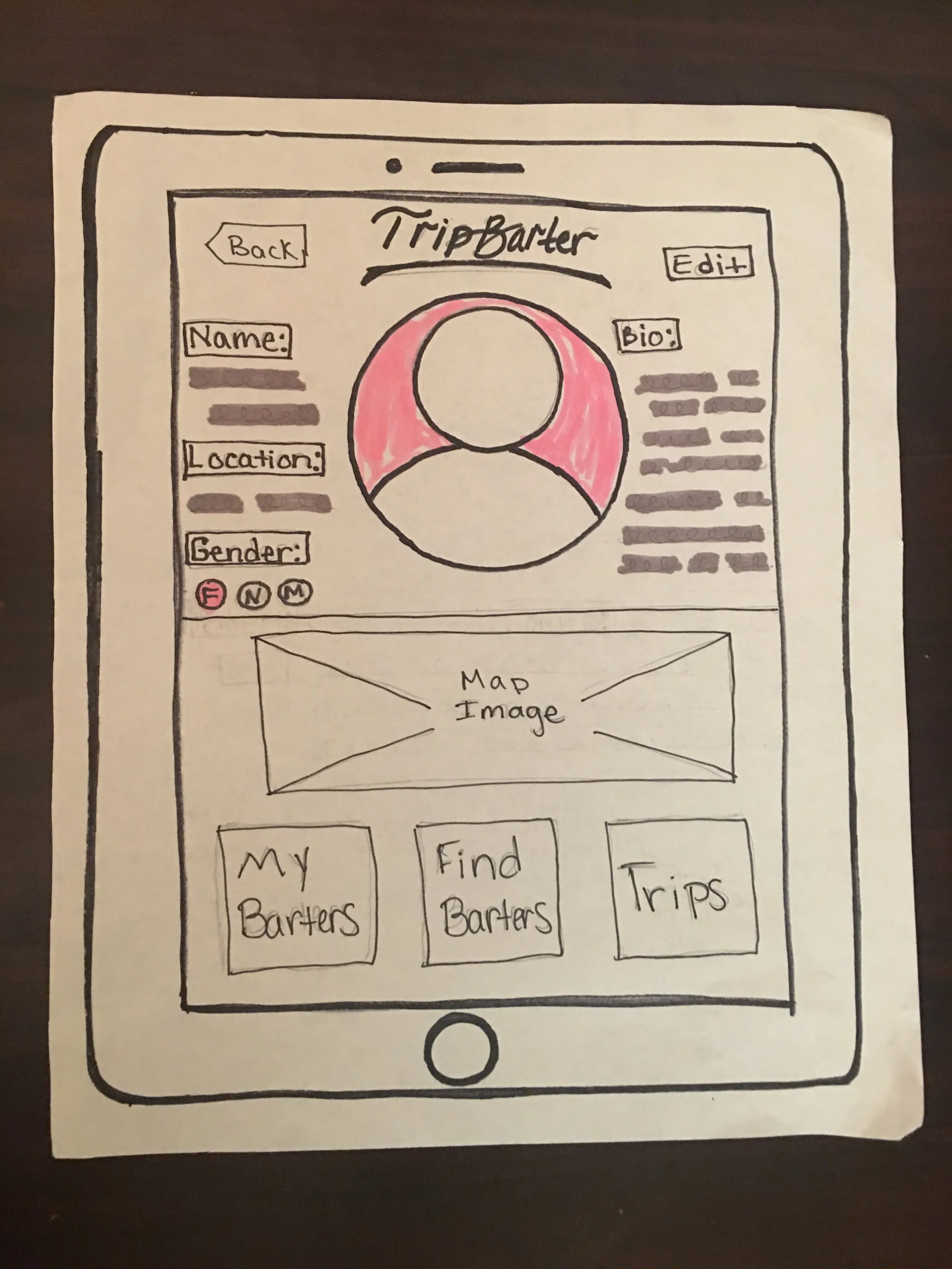
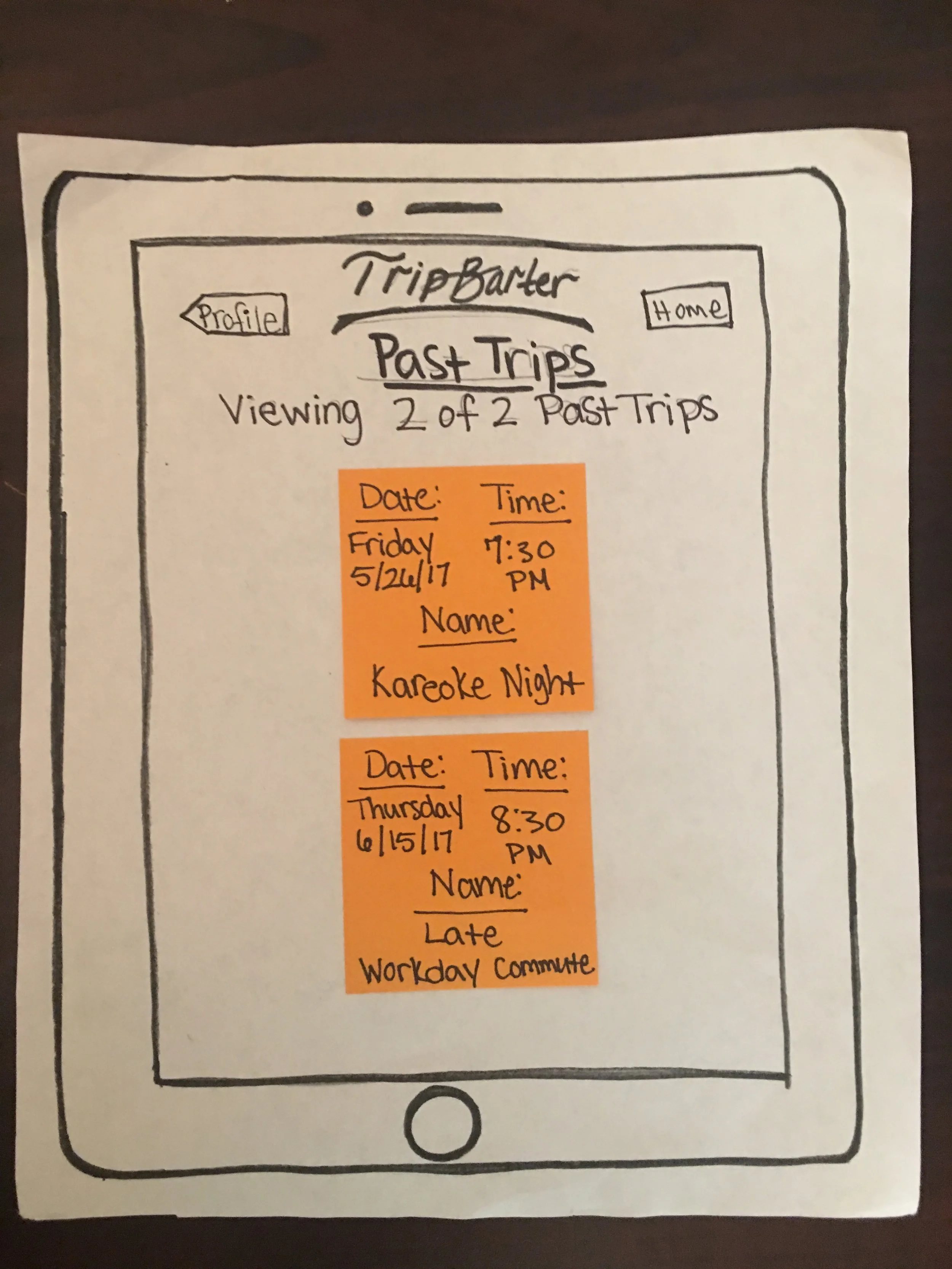
In Trip Barter, users list their items, services, or skills for barter as part of their profile before trip planning.
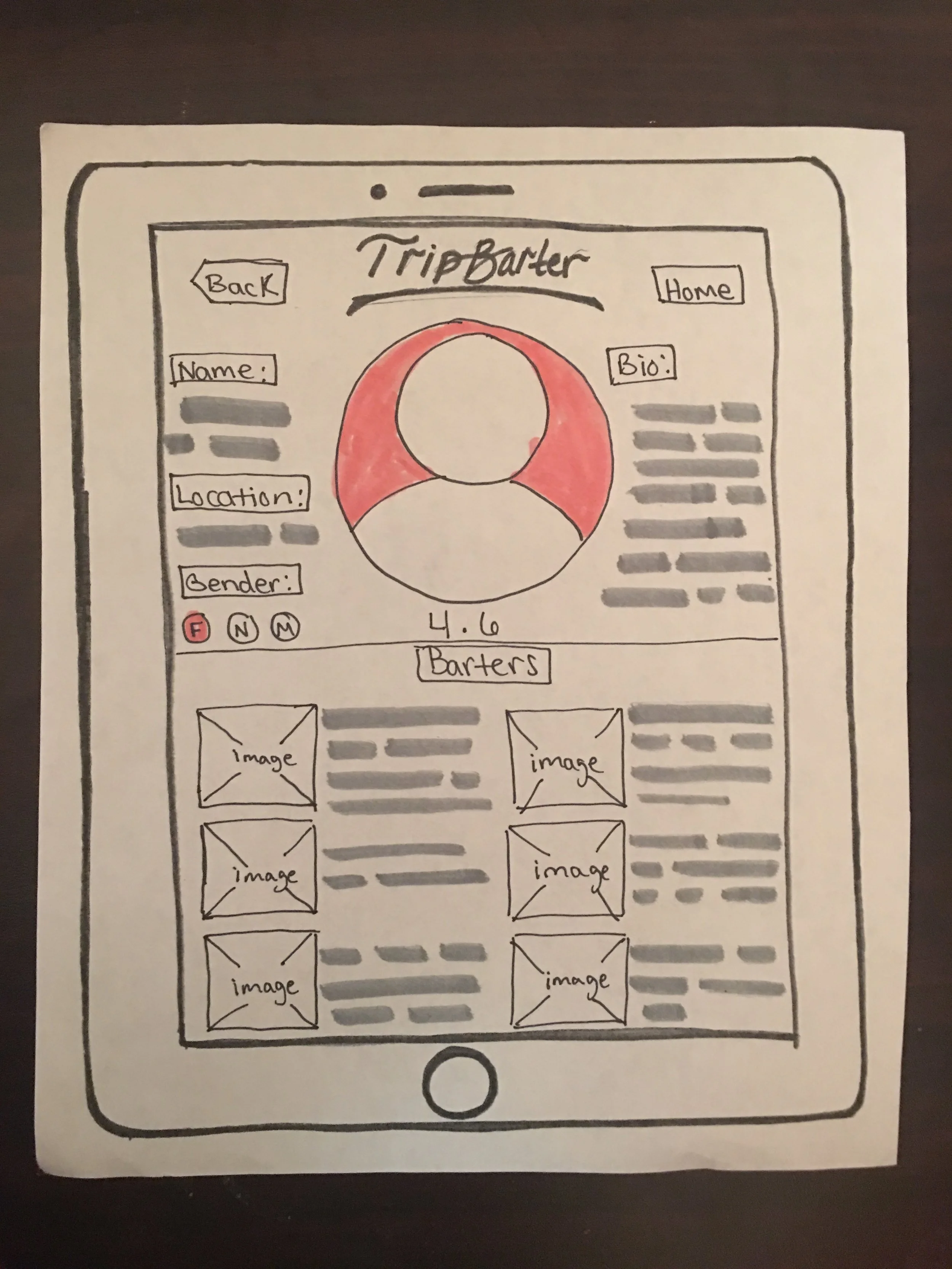
Whether a user has a fish sitting side-hustle, or wishes to use Starbucks gift cards as their bartering chips, they’re able to list these offerings in their profile main page and view what other riders are offering in their profiles.
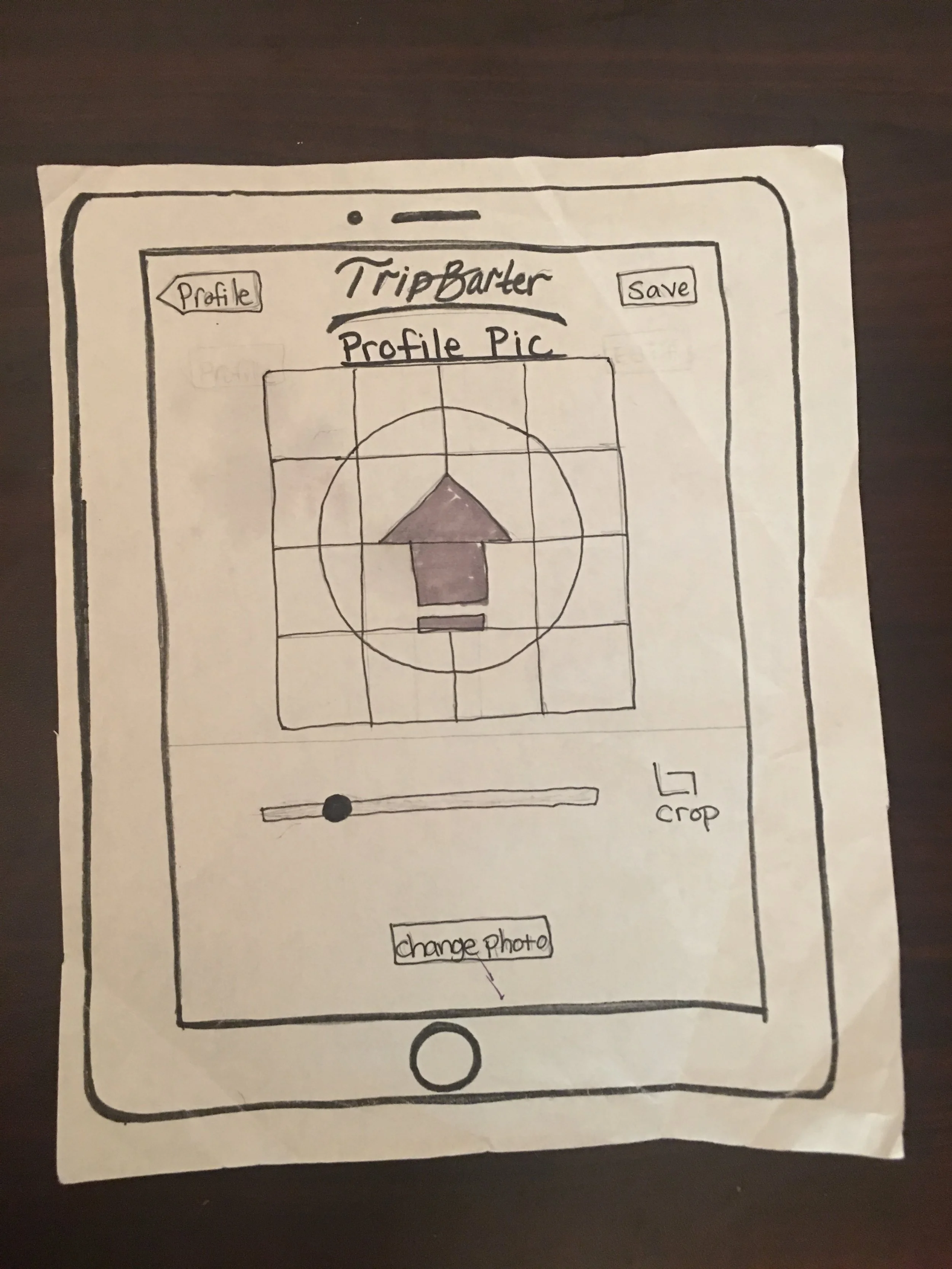
The profile detail page would list information common to other social app platforms to offer basic information and other insight to help users find carpoolers whom they'd like to share a ride with.
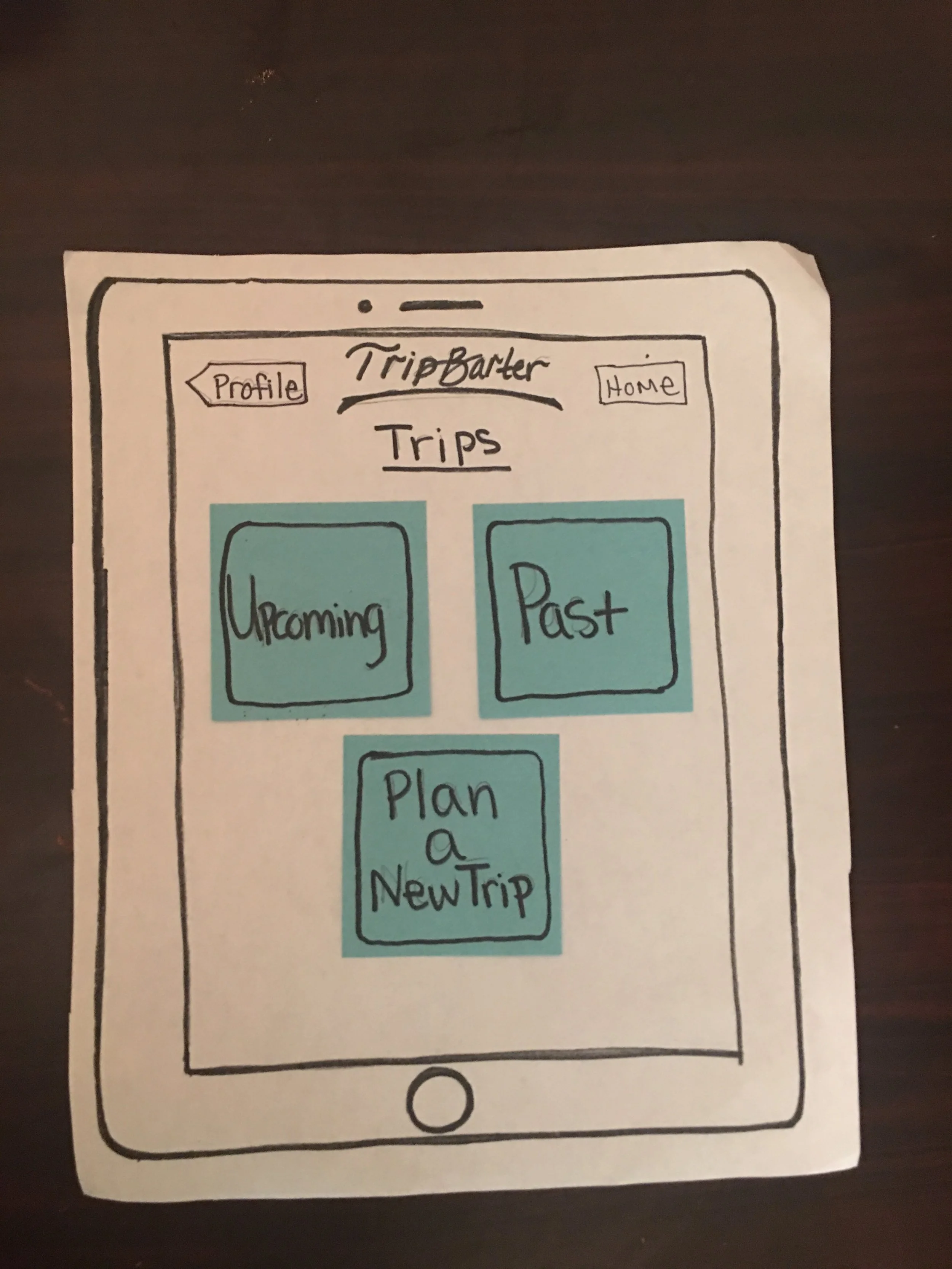
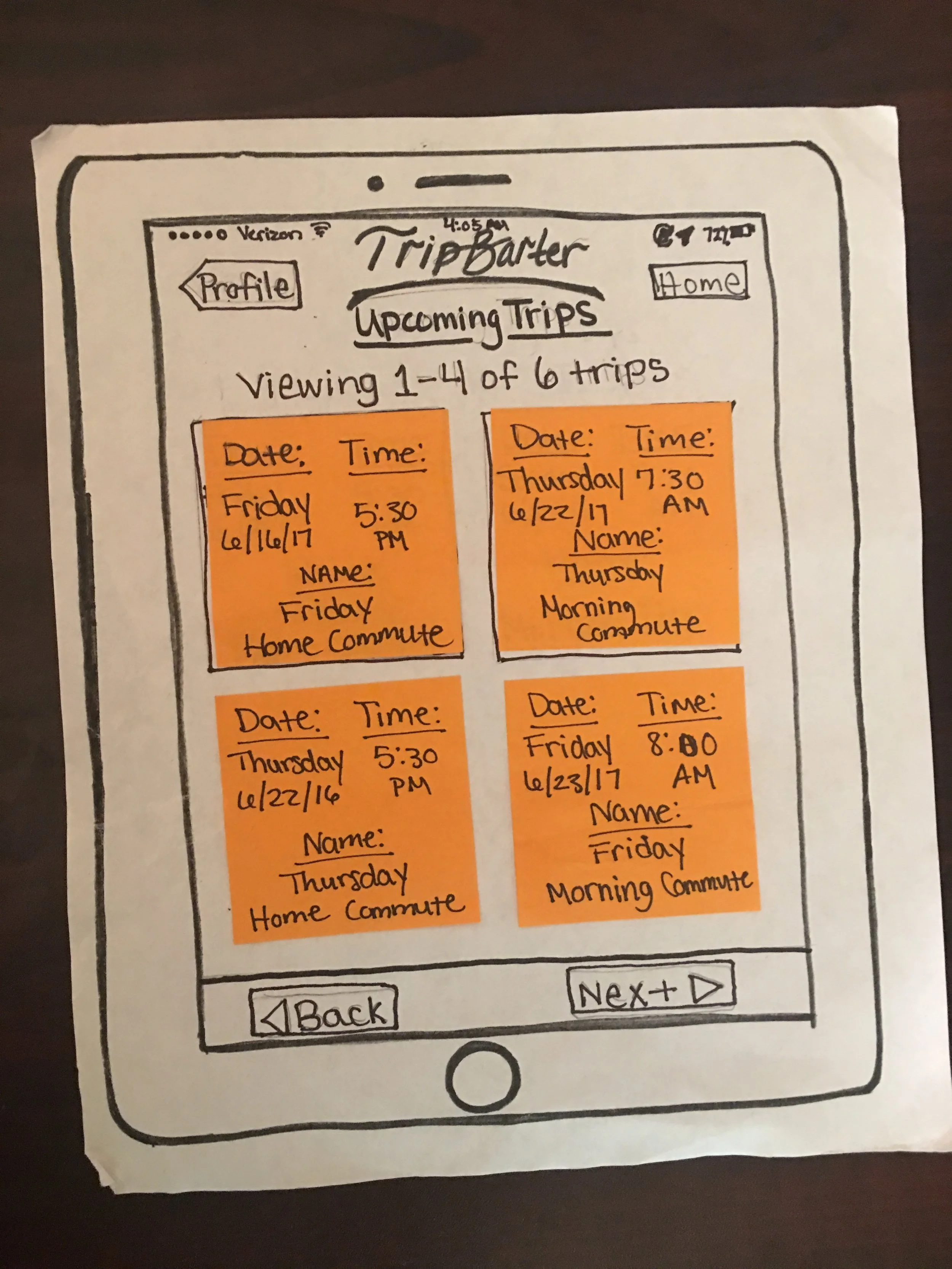
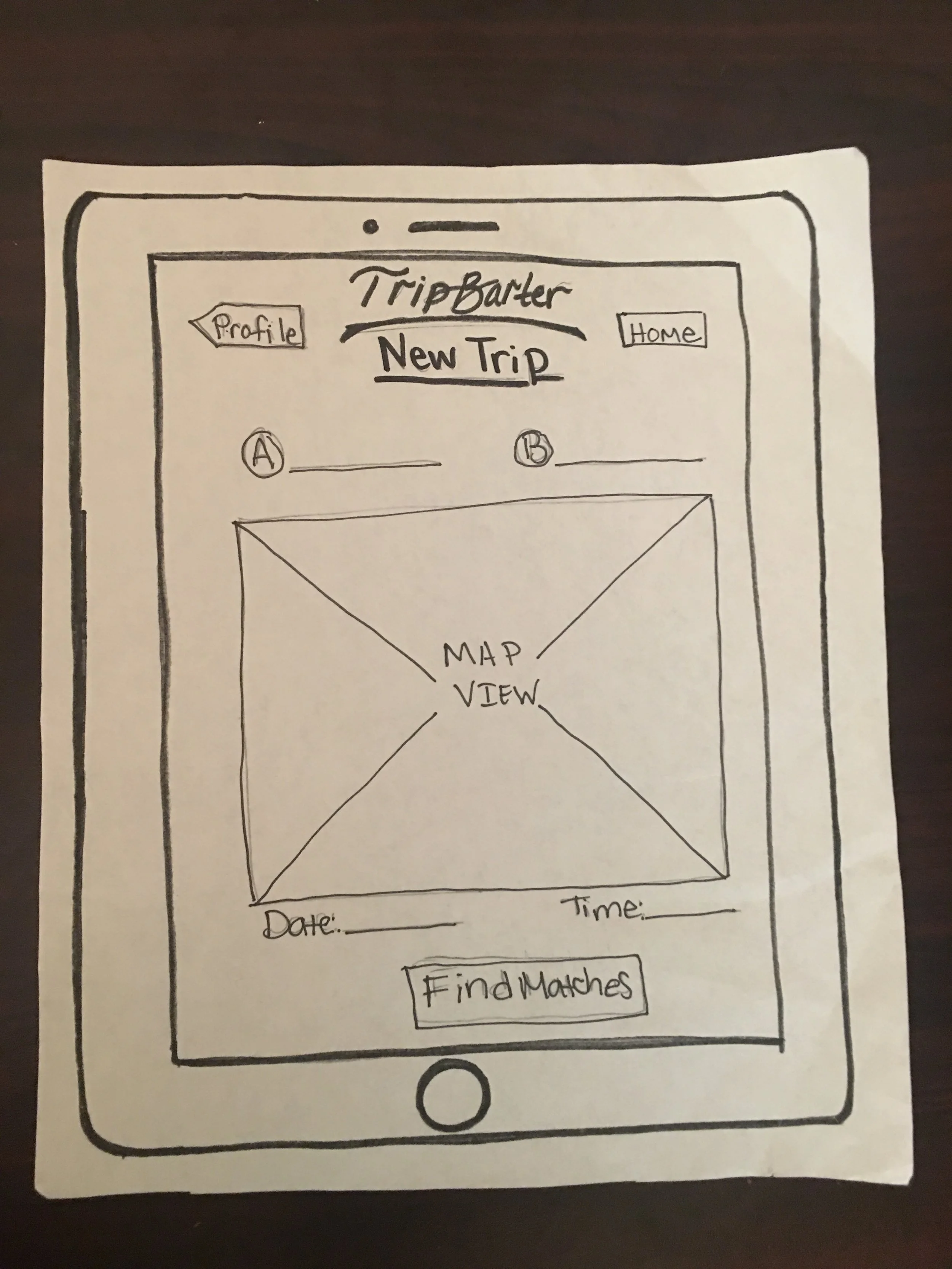
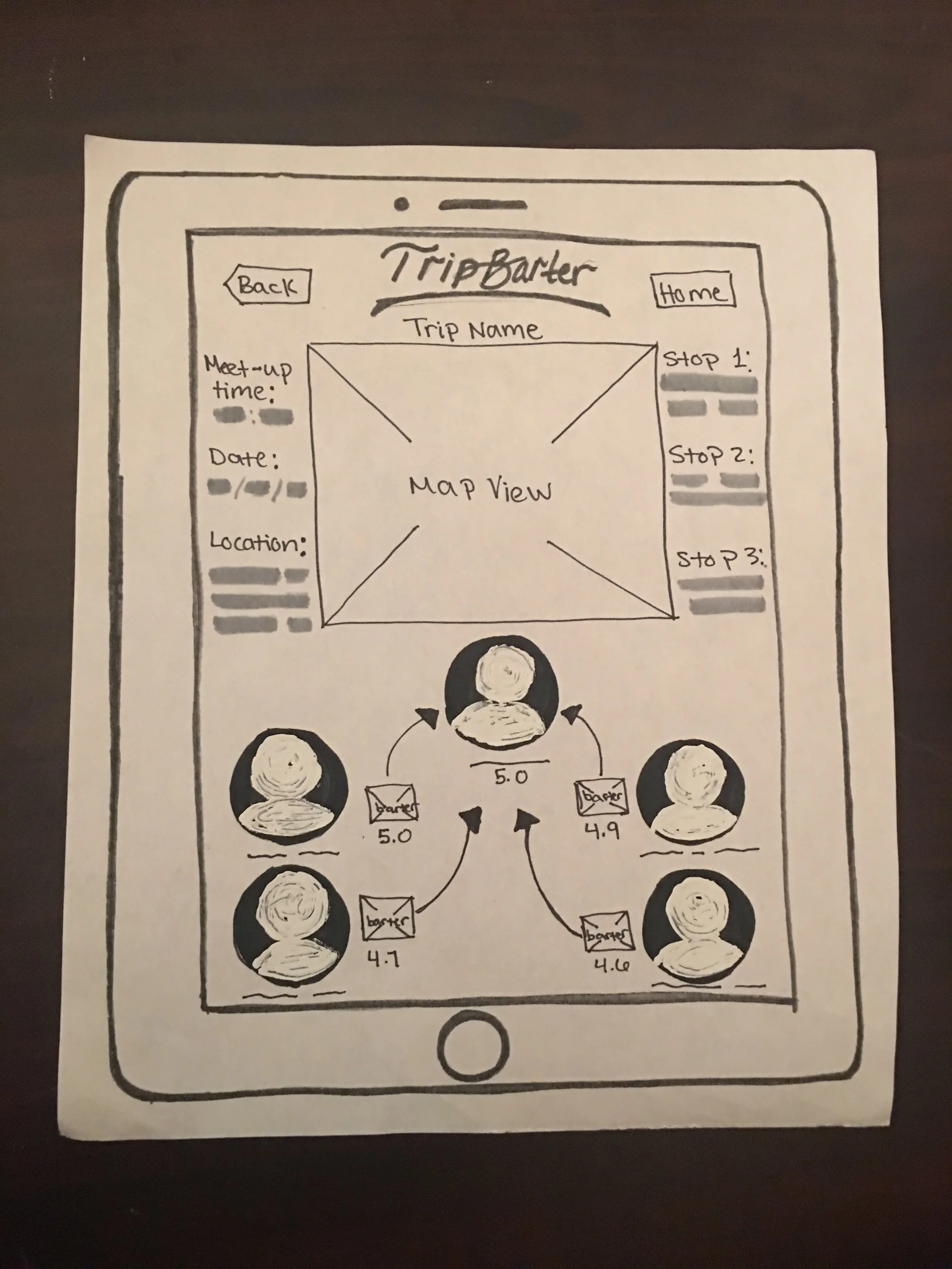
The user then uses their barter items to request carpool trips, or as a driver, seek out passengers whose bartering items they’d enjoy. Each user would also be given a rating for their barters, driving, or trip experience.
design
I then used my feedback from users to design sketches of screens for my user flows. I took screenshots of each sketch and uploaded them to POP, where I was able to then test it.
next steps
Conduct User testing on the new Hi-Fi prototype.
Make iterations appropriately, based on user testing.
hindsights
Grow:
Mapping user flows can get elaborate. Instead of trying to map every flow, focus on the key feature flows of the app.
Glow:
I am very comfortable interviewing users and soliciting testing from random participants.
Lessons:
1. TIME MANAGEMENT!
Good time management skills are critical for a one week sprint. There were a few nights that were later than they should have been.
2. The more data the better.
I could have done more interviews. I also found it tricky to dig deeper with my questions, without “leading”, during my interview process.
3. User testing is paramount!
I learned how much something as simple as an icon, or button placement can affect the user experience.
4. There are amazing tools out there for designers!
Tools like Lucidchart® and Prototype on Paper (POP®) are super helpful and fun to use.
5. There’s a lot to learn!
UX Design is like the ocean.
~end~
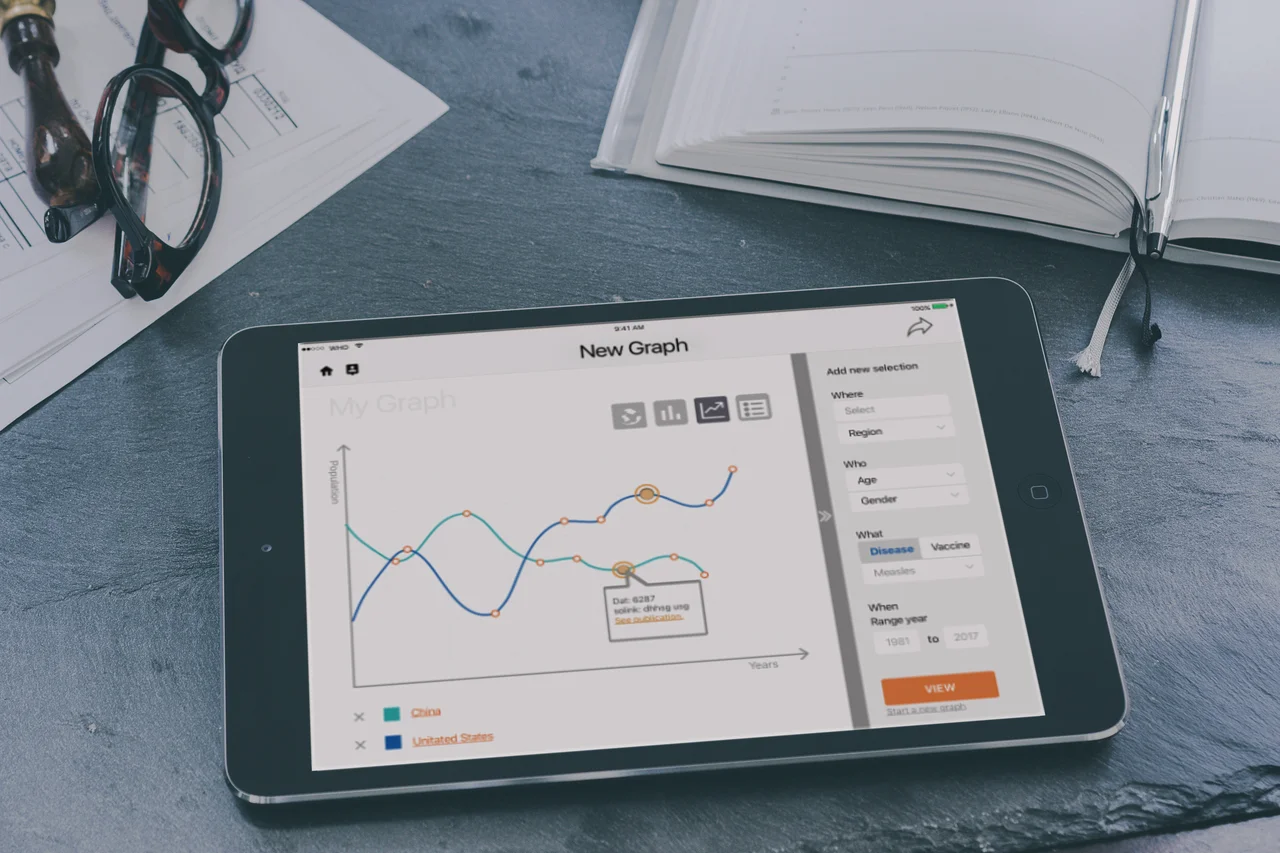
Immunization Summary
Data Visualization Optimized for Tablet
A Case Study
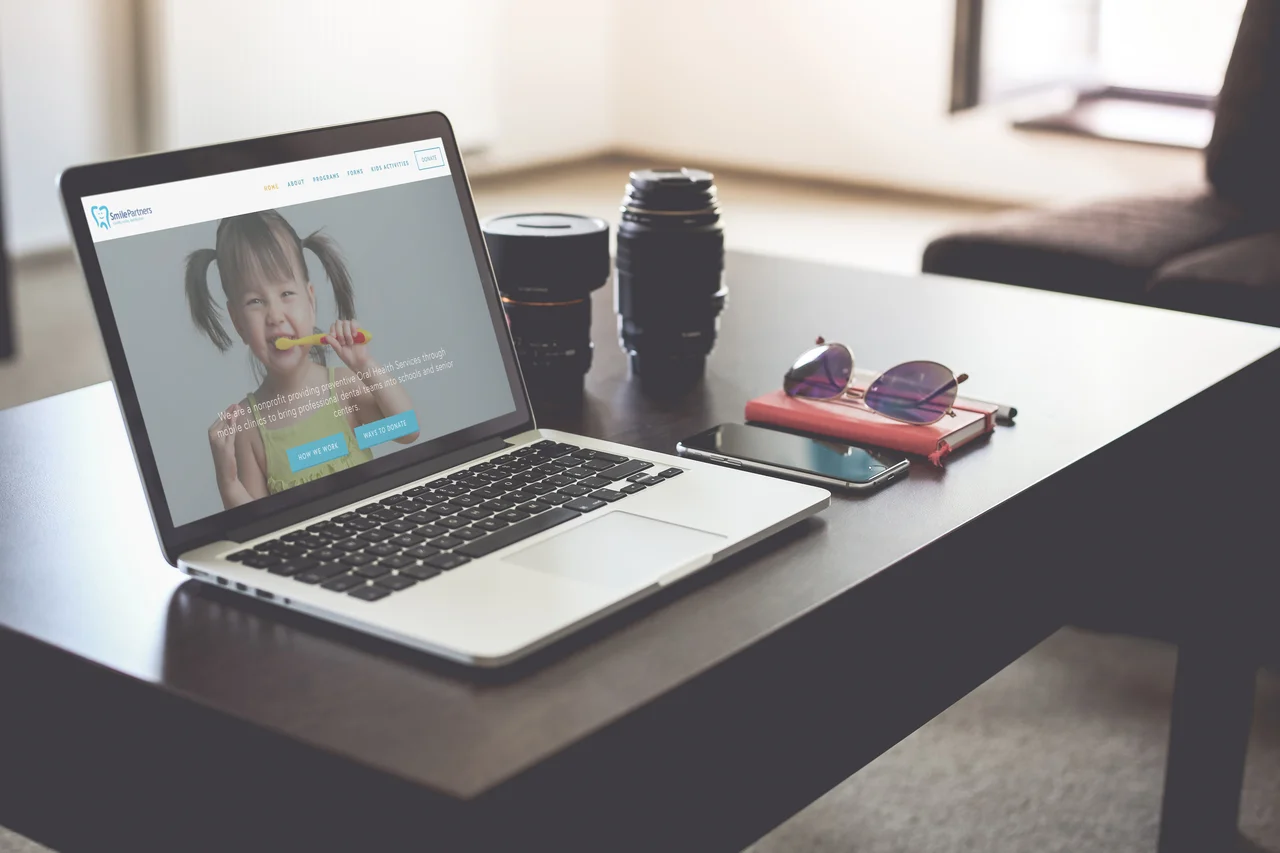
Smile Partners
Nonprofit Website Redesign
A Case Study